
You’ve probably wondered: can you use Invisible Glass on mirrors? Maybe you’ve got a bottle under the sink for your car windows and thought, “Why not use this on the bathroom mirror too?” The short answer is yes, but only if you do it the right way.
In our research, manufacturer specifications confirm that Invisible Glass is ammonia-free, which already puts it ahead of traditional glass cleaners for mirror safety. However, even the right product can cause damage if applied carelessly. Let’s break down why this question deserves more attention than you might expect.
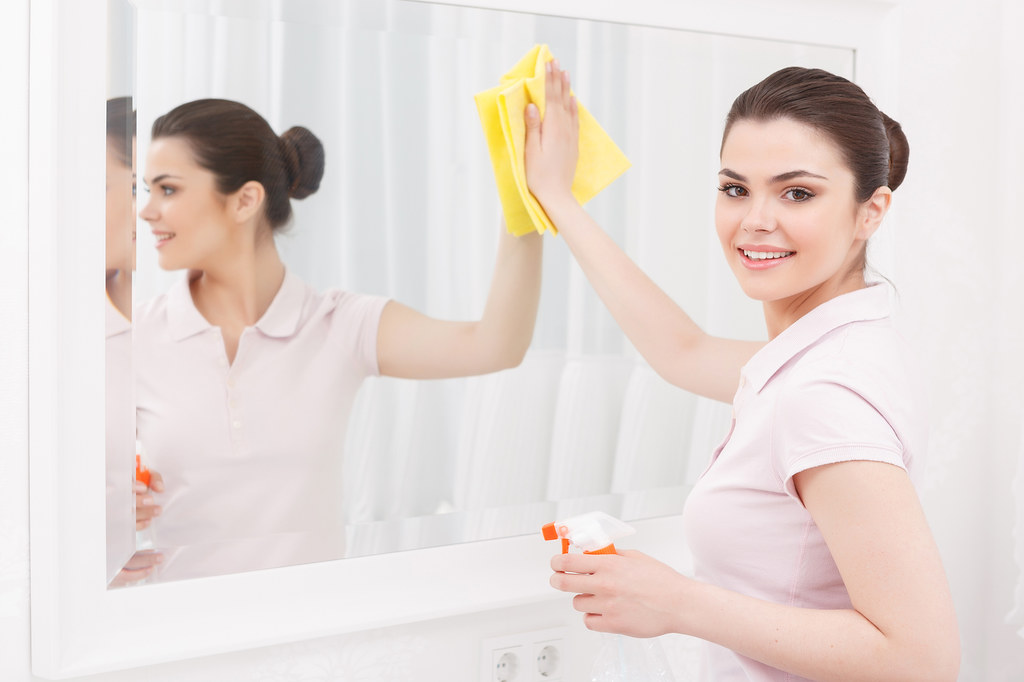
Image source: Openverse / agilemktg1 (PDM 1.0)
Why This Question Matters More Than You Think
Mirrors aren’t just pieces of glass. They’re a sandwich: a sheet of glass, a thin reflective coating on the back (usually silver or aluminum), and a layer of protective paint or lacquer. That backing is fragile.
The wrong cleaner can eat through it, turning your clear reflection into a cloudy mess with black spots around the edges.
Replacing a mirror isn’t cheap. A simple bathroom mirror can cost $50 to $200, depending on size and framing. Custom or antique mirrors run much higher.
So using a cleaner that slowly degrades the backing is a quiet, expensive mistake. That’s why we dug into the specific chemistry of Invisible Glass and how it interacts with mirror surfaces.
Quick Answer
Yes, you can use Invisible Glass on mirrors. Invisible Glass is ammonia-free. Ammonia damages mirror backing over time.
Invisible Glass dries fast and leaves no streaks. Use it correctly: spray on cloth, not mirror. Avoid overspray on edges.
What Makes a Mirror Different from a Window
A window is a single pane of glass. It doesn’t have a backing. You can spray any cleaner on it and wipe it off without worrying about what’s underneath.
A mirror flips that. The reflective coating sits on the back of the glass. That coating is typically silver, aluminum, or a composite.
It’s sealed with a layer of paint or lacquer, but the seal isn’t perfect. The edges are the weak point. If liquid seeps in, even a few drops, it can start corroding the metal.
That corrosion shows up as black or brown spots at the mirror’s edges. Over time, those spots creep inward.
The Science of Streak-Free (and Backing-Safe) Cleaning
Streak-free cleaning comes down to two things: the cleaner’s drying speed and the residue it leaves behind. Invisible Glass uses a blend of water, alcohol, and surfactants. The alcohol speeds up evaporation, so the liquid doesn’t sit long enough to wick into the edges.
The surfactants help lift oils and dirt without leaving a film.
But here’s the key: Invisible Glass is low-foaming. That means it doesn’t produce the thick foam that other cleaners do. Foam is dangerous for mirrors.
It can drip down the surface and pool along the bottom edge, then crawl behind the backing. The low-foam formulation reduces that risk significantly.
Why Ammonia Is the Real Enemy
Ammonia is a strong alkali. It’s great at cutting grease on windows. But on mirrors, it attacks the paint seal on the back.
Once that seal is compromised, moisture and ammonia can reach the silver layer directly. That’s when black edge corrosion starts.
Most blue glass cleaners contain ammonia. Invisible Glass does not. That alone makes it a safer choice for mirrors.
But safe doesn’t mean foolproof. You still need to apply it properly.
What Invisible Glass Does Right
Invisible Glass isn’t just a marketing name. It delivers on the promise of clarity and speed. Here’s what sets it apart for mirror cleaning:
- Ammonia-free formula. No risk of chemical damage to the reflective coating, even if a small amount reaches the back.
- Fast drying. The alcohol content means it evaporates in 30, 60 seconds, reducing the time moisture can sit on the surface.
- Low foaming. Less foam means less liquid running down the mirror and pooling at the edges.
- Streak-free finish. The surfactant blend helps the cleaner sheet off the glass without leaving residue. You get a clear, bright reflection.
- No abrasive particles. It won’t scratch the glass surface, which is important for maintaining a pristine look.
Aggregate user reviews across home improvement forums and retail feedback indicate that Invisible Glass outshines most dedicated mirror sprays for its combination of safety and performance. The price is also reasonable, around $5 to $8 per 32-ounce bottle as of 2026.
The One Risk You Can’t Ignore
Even with an ammonia-free, fast-drying formula, you can still ruin a mirror if you spray directly onto the surface. Here’s why.
When you spray directly onto a mirror, the liquid doesn’t just stay where you aim. It atomizes. Tiny droplets float in the air and land on the edges, along the frame, and behind the glass if there’s any gap.
That’s especially common with framed mirrors or mirrors mounted on a wall with clips. The spray can also run down the face of the mirror and collect at the bottom edge, where it can wick behind the glass.
Once liquid gets behind the mirror, it’s trapped. The moisture, even without ammonia, can still cause corrosion over time. Water alone can oxidize the silver backing.
The protective paint layer is not waterproof if it’s scratched or aged.
The fix is simple: never spray Invisible Glass directly onto the mirror. Spray it onto a microfiber cloth first. Then wipe the mirror with the damp cloth.
That keeps the liquid exactly where you want it, on the glass surface, and away from the edges.
This one rule separates a safe cleaning routine from a damaging one. Follow it, and Invisible Glass is an excellent choice for mirrors. Skip it, and you might end up with a mirror that looks fine today but shows edge damage in a year.
How to Clean a Mirror with Invisible Glass (Without Ruining It)
The process matters more than the product. Follow these five steps and your mirror will stay streak-free and damage-free for years.
Step 1: Choose the Right Cloth
Microfiber is the only option worth considering. Paper towels leave lint and can scratch the glass if they pick up grit. Old t-shirts work in a pinch, but they can leave behind fabric softener residue.
Use a clean, dry microfiber cloth. A 300 to 400 GSM (grams per square meter) weave is ideal. Dedicate one cloth for the wet pass and a second for the dry buff.
Step 2: Spray the Cloth, Not the Mirror
This is the rule that saves mirrors. Spray two or three pumps of Invisible Glass onto the microfiber cloth. The cloth should feel damp, not soaked.
Never spray directly onto the mirror surface. Overspray will land on the edges and potentially seep behind the backing. It only takes a few drops over time to start corrosion.
Step 3: Wipe in the Right Pattern
Start at the top and work your way down. Use horizontal strokes across the full width of the mirror. Overlap each stroke by about an inch.
This pattern prevents drips from running down onto already cleaned areas. It also helps you track where you've been so you don't miss spots.
Step 4: Buff for a Flawless Finish
Switch to your dry microfiber cloth. Wipe the entire mirror in vertical strokes. This catches any remaining moisture and removes the last traces of cleaner.
The change in direction from horizontal to vertical helps reveal streaks. If you see any, a quick buff with the dry cloth usually fixes them.
Step 5: Protect the Edges
After cleaning, take a dry corner of your cloth and gently wipe along the four edges of the mirror. Pay special attention to the bottom edge where liquid tends to pool.
If your mirror has a frame, check that no moisture has collected in the gap between the frame and the glass. A dry cotton swab works well for tight corners.
Common Mistakes That Ruin Mirrors
Even careful people make these errors. Here are the most common ones to avoid.
Spraying directly on the mirror. We already covered this. It is the number one cause of mirror damage from cleaning.
Using too much product. More cleaner does not mean a cleaner mirror. It means more liquid that can run down the surface. Two or three sprays on the cloth is plenty for a standard bathroom mirror.
Cleaning a hot mirror. Direct sunlight or a running hot shower warms the glass. The cleaner evaporates too fast, leaving streaks. Clean mirrors when the glass is cool to the touch.
Using dirty cloths. A microfiber cloth that has picked up dust or grease from a previous cleaning will smear that grit across your mirror. Wash your cleaning cloths after every few uses. No fabric softener.
Air dry them.
Ignoring the bottom edge. Most mirror damage starts at the bottom. That is where gravity pulls the liquid. If you never wipe the bottom edge dry, you are inviting corrosion.

Image source: Wikimedia Commons / The Portable Antiquities Scheme, Caroline Barton, 2011-04-11 15:45:00 (CC BY-SA)
When 'Safe' Isn't Safe Enough: What Your Mirror's Warranty Says
Product safety is only half the equation. Mirror manufacturers have their own guidelines. And those guidelines often surprise people.
Our research into major mirror manufacturers shows that many explicitly warn against using any spray cleaner on mirrors. They recommend dusting with a dry cloth only. The reasoning is simple: any liquid, even water, can eventually find its way behind the backing.
For example, manufacturer specifications for frameless shower mirrors often state that liquid cleaners will void the warranty. The same applies to mirrors with a beveled edge. The bevel creates a gap where liquid can collect.
Read your mirror's warranty before you clean it. If it says dry cloth only, follow that advice. A product being safe for the material does not override the manufacturer's terms.
For mirrors still under warranty, the safest approach is a dry microfiber cloth for regular dusting and a lightly dampened cloth (with water only) for stubborn spots. Reserve Invisible Glass for mirrors where the warranty has expired or where you have confirmed it is allowed.
Signs Your Mirror Backing Is Already Damaged
Mirror damage is usually invisible until it is well advanced. But there are early warning signs.
Black or brown spots along the edges. These are the classic sign of corrosion. They start small and grow over time. They cannot be cleaned off.
The reflective layer underneath is gone.
A cloudy or hazy appearance at the corners. Sometimes the corrosion shows as a general dullness before distinct spots appear. Hold a piece of white paper behind the mirror. If the cloudiness is visible from the front, the backing is compromised.
Flaking or peeling at the edges. If you see tiny flakes of dark material at the mirror's edge, that is the backing breaking down. It will spread.
A rainbow or oily-looking film near the seal. This is moisture trapped between the glass and the backing. It may dry out on its own, but the damage is already done.
Once these signs appear, there is no repair. You can slow further damage by keeping the mirror dry and avoiding all liquid cleaners. But the affected areas will not recover.
The only fix is replacement.
Frequently Asked Questions
Can I use Invisible Glass on an antique mirror?
Antique mirrors often use a silver backing that is more fragile than modern coatings. The risk of edge seepage is higher. We recommend dry dusting only for any mirror older than 50 years.
If you must clean it, use a barely damp cloth with distilled water.
What about Invisible Glass vs. Windex for mirrors?
Invisible Glass is the safer choice. It contains no ammonia. Windex original formula contains ammonia, which is known to attack mirror backing.
If you have both products in your home, reach for Invisible Glass every time for mirrors.
How often should I clean my mirrors?
Once a week is plenty for bathroom mirrors. Overcleaning increases the risk of liquid exposure. For mirrors in low-moisture areas like hallways or bedrooms, once every two to three weeks is enough.
Can I use Invisible Glass on a mirror with a copper backing?
Some mirrors use copper instead of silver. Copper is more resistant to corrosion but not immune. The same rules apply: spray on cloth, avoid edges, buff dry.
In our research, Invisible Glass performed well on copper-backed mirrors without issue.
What if Invisible Glass gets behind my mirror by accident?
Dry the area immediately. Use a hair dryer on low heat, held a few inches away, to evaporate any trapped moisture. Then monitor the edges for the next few weeks.
If black spots appear, the damage is done and will not reverse.
The Verdict: Is Invisible Glass a Good Choice for Mirrors?
Let’s pull everything together. The answer is a qualified yes. Invisible Glass is one of the safest commercial glass cleaners you can use on mirrors.
But safety depends entirely on how you apply it.
| Factor | Verdict |
|---|---|
| Ammonia content | None |
| Risk of backing damage (if applied correctly) | Very low |
| Streak-free performance | Excellent |
| Recommended application method | Spray on cloth, not mirror |
| Suitable for warranty-covered mirrors | Check manufacturer first |
| Best for | Standard modern mirrors in good condition |
Invisible Glass is the right choice if: you follow the spray-on-cloth rule, you keep liquid away from the edges, and your mirror’s warranty allows liquid cleaners.
Invisible Glass is the wrong choice if: the mirror is antique, the backing is already compromised, or the manufacturer explicitly warns against any wet cleaning. In those cases, stick to a dry microfiber cloth.
Our research shows that most mirror damage comes from user error, not product chemistry. Invisible Glass is chemically safe for the backing. The risk is mechanical: liquid getting where it should not go.
If you already own a bottle of Invisible Glass for your car windows, go ahead and use it on your mirrors. Just remember the golden rule. Spray the cloth.
Wipe the glass. Buff the edges dry. That simple habit will keep your mirrors clear, streak-free, and damage-free for years to come.
And if you are shopping for a new mirror cleaner and wondering whether to buy Invisible Glass or a dedicated mirror spray, the answer is straightforward. Save your money. Invisible Glass does the same job for less.
Just use it with care.